Publications

published in 2025

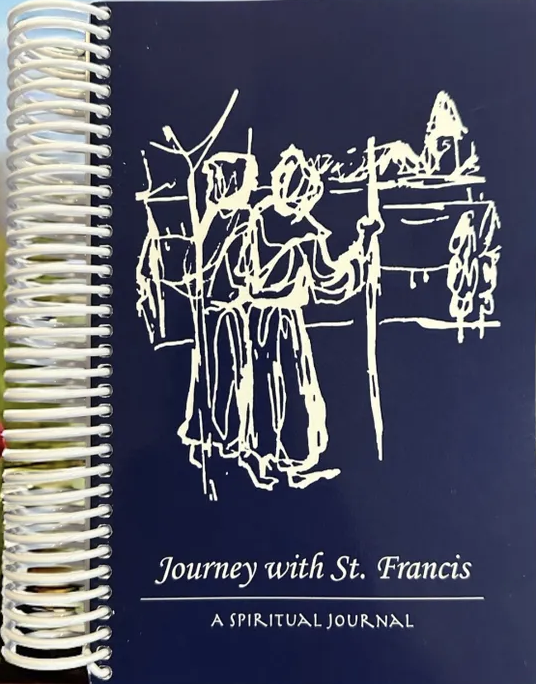
Journey with St. Francis: A Spiritual Journal is a beautiful way to walk with St. Francis of Assisi during the centennial celebration of the 800th anniversary of his death in 2026, while deepening your own spiritual walk. This all-new 396-page journal, bound in elegant white wire, invites you to step into the Franciscan spirit each day of the year. Every page features a thought-provoking quote from the writings of St. Francis, offering gentle encouragement and timeless wisdom. Alongside these daily inspirations, the journal includes a complete listing of Franciscan feast days, weaving the rhythms of the Franciscan tradition into your own prayer life.

Adding to its beauty, the artwork of Sr. Kay Francis Berger, OSF, graces the cover and illuminates each month with her unique vision, blending art and devotion. The journal also includes a heartfelt preface by Mary Esther Stewart, OFS, an inspiring introduction to 800 years of Franciscan spirit by André Cirino, OFM, and Josef Raischl, OFS, a thoughtful word from the translator Jean François Godet-Calogeras, Ph.D., and a tender note about the artist by Sr. Marianne Saieg, OSF. Together, these voices create a chorus of Franciscan wisdom and creativity that enriches the experience of journaling.

Whether you use it to record prayers, reflections, or daily gratitude, Journey with St. Francis is more than a journal—it is a spiritual companion. As you write, you walk alongside Francis, letting his words guide you into deeper peace, joy, and connection with God’s creation. Beautiful, practical, and profoundly inspirational, this journal is a perfect gift for yourself or anyone seeking to live more fully in the spirit of St. Francis of Assisi.

Details TAU PUBLISHING click here.
published in 2018

This book has become my Vademecum. I spend time with the book regularly, re-reading different sections as my mood leads me. What an extraordinary gift! St. Francis calls all of creation his brothers and sisters. We discover fraternity in solitude. At any rate, your text has led me from the active life to embrace the solitude of the elderly. I have you to thank for helping me to articulate it and embrace it. 
Anthony Carrozzo OFM, Holy Name Province, NY

Details Tau-Publishing

Review Tau/ India

Review by David Couturier OFMCap

published in 2012

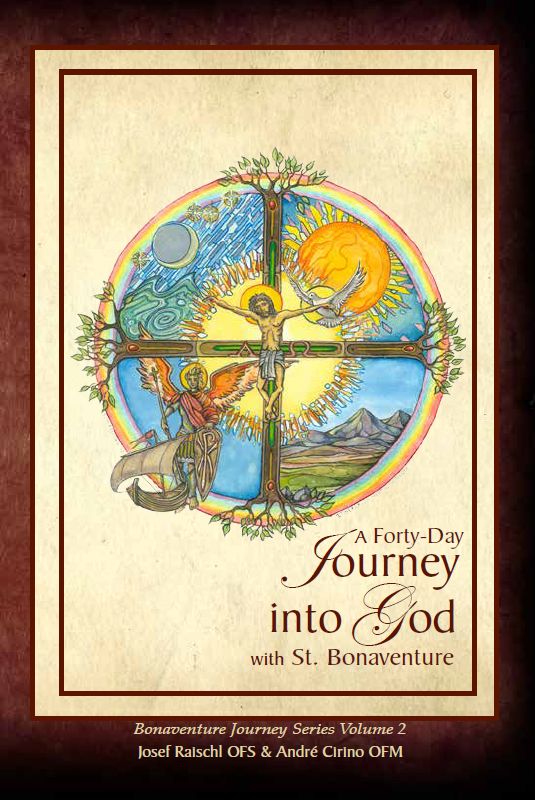
Journey on a forty-day retreat with two experienced retreat directors into the joyful acceptance of goodness that is at the core of Franciscan spirituality.The basic theological concepts found in St. Bonaventure’s great work are presented in clear and practical language. Each day there are readings from the Journey into God, reflections by the two authors, and exercises the reader can carry out in daily life. The book may be used by groups or individuals journeying alone. 

For hearts and souls hungering for God, this book opens up new vistas. The authors show us how to get inside the heart of Bonaventure and how to embrace his understanding that all the universe is a ladder by which we can ascend to God. Sister Roberta McKelvie, OSF, Mission Integration, Alverna University, Reading, PA.

In our use of the Journey text over Lent, it was relatively easy to adapt the format to our situation. People were following day by day and all spoke of how rich the book is, how they welcomed the opportunity to take it more slowly and how they plan to return to it! Working with this text over time has not only furthered my love and appreciation of Franciscan spirituality but has helped me develop the language and confidence to share this with others. Louise Beesley, Solitude Group, Canterbury, England

published in

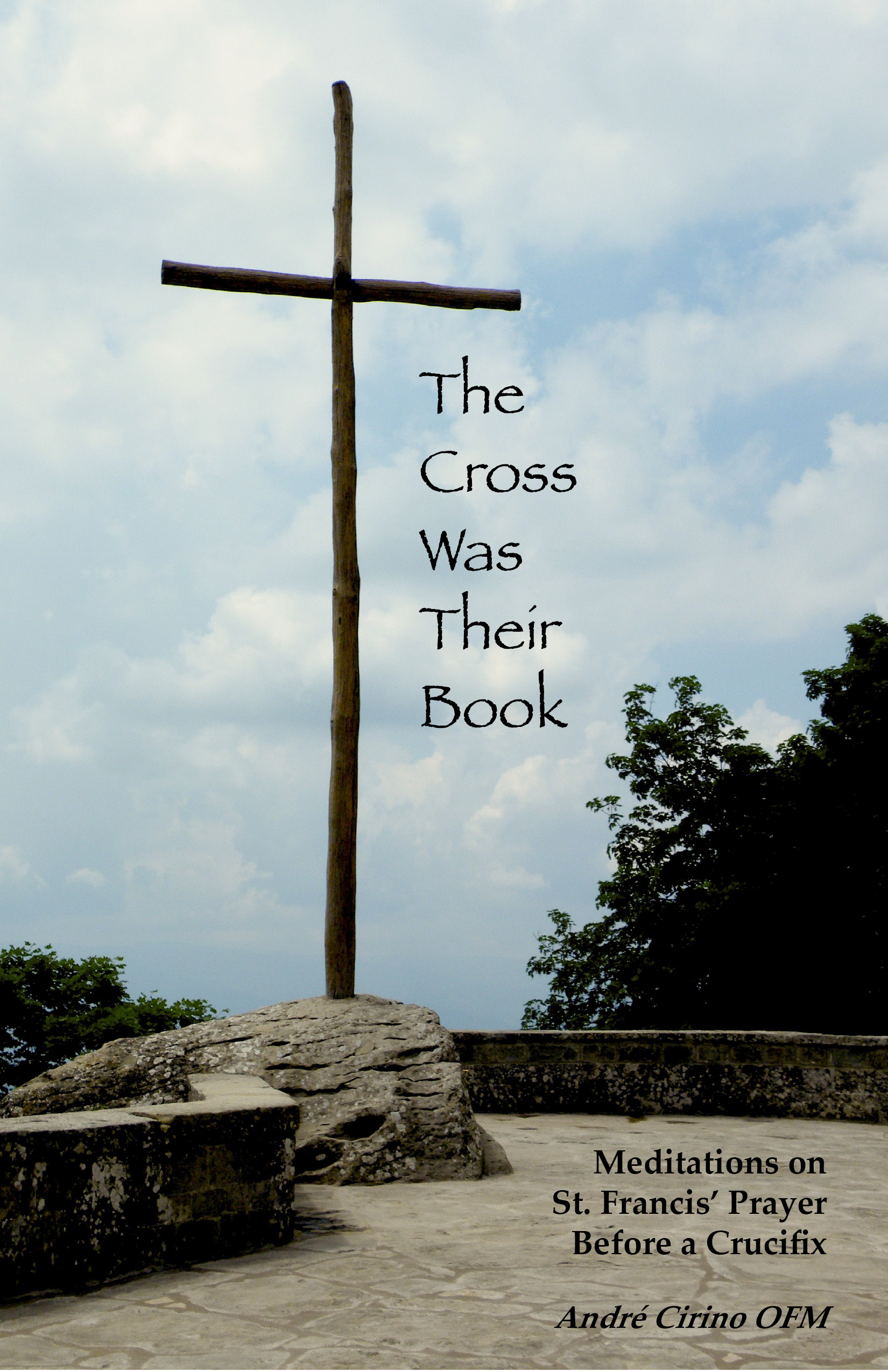
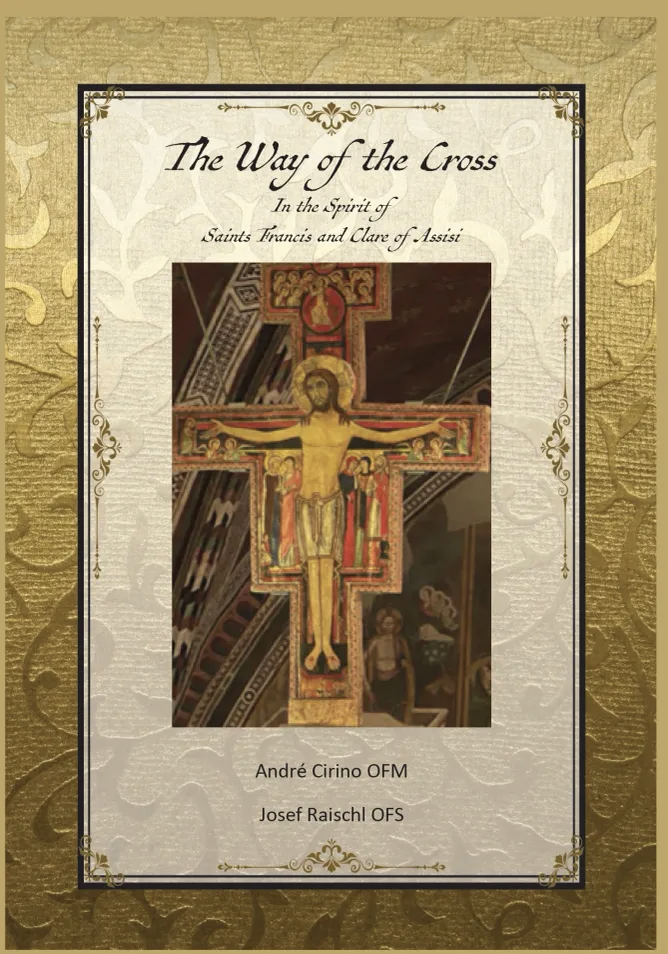
Francis prayer before the crucifix is at the heart of Franciscan prayer. Andres meditations on this prayer are insightful instruments of grace. They enable us to go deeper into the heart of this prayer hand ourselves over to God, and contemplate Gods presence in the crucifix and in all of life.


Details Tau-Publishing

published in 2005

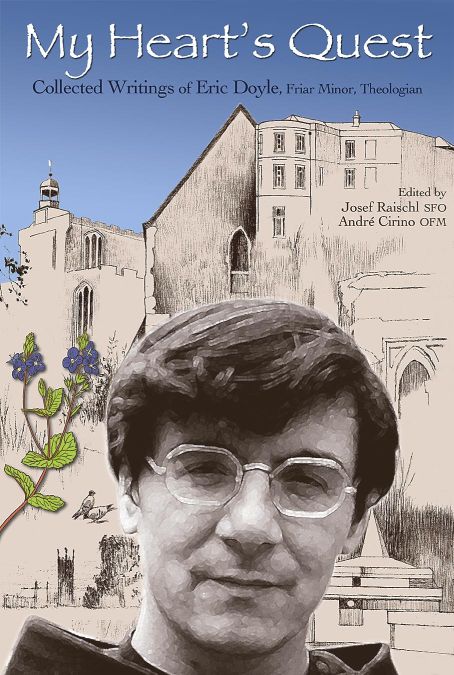
Now comes the superb, breathtaking collection of Doyle’s writings, My Heart’s Quest, edited with great dedication and skill by Josef Raischl and André Cirino. A loving tribute to his writings and person. 

Finally we have a wide range of his writings and talks. To cite individual passages and chapters is impossible simply because of the high quality and clarity he brought to his audiences. As he dips into this collection the reader almost spontaneously wishes that he had met Eric Doyle and listened to his seemingly informal lectures.


Collectanea-Francescana
Anglican-Franciscan

Review by Rouse
Review by S. Mulholland OFM
Review Br. Austin
Photos
Details Tau-Publishing

published in 2012

Finally, a translation of Bonaventure’s most popular work that is conducive for personal prayer and for actually embarking on the journey into God! While remaining faithful to the original work, the translators allow the Seraphic Doctor’s spirit to come alive for the modern reader in a way that has not been done before in the English-speaking world.
Richard Martignetti OFM, STD Immaculate Conception Province, New York

Josef Raischl and André Cirino’s translation of the Journey into God is a gift. It puts St. Bonaventure’s Itinerarium Mentis in Deum in the hands of lay people who might otherwise find the text complicated and difficult to comprehend. It reads like poetry, yet does not dilute the meaning; rather, it enhances it. This is a valuable tool for ongoing formation for Secular Franciscans everywhere.
Toni Maconi OFS, Little Portion Secular Franciscan Fraternity, New York


Details Tau-Publishing

published in 2010

As we pray with St. Francis´ Office of the Passion, we find ourselves exposed to the inside of Francis’ thought, to that subtle place where intuitions meet and insight is born. He knew Scripture with his deepest being and when, at the end of his life, he said he knew much of it by heart, he meant that phrase most profoundly and literally.  

We know that Clare prayed this Little Office and learned from it as we do—that the Hero who endured disgrace and became “a stranger and a pilgrim” [5:8] was and always is the King of Glory who Clare saw as she lay on her deathbed: He who “is God and has shone upon us” [9:6]. To drink daily from this Franciscan spring has been an enrichment and a privilege and something which I would wish to encourage everyone to do so that we may prepare ourselves to “see the King of Glory” who shines upon us.

Frances Teresa Downing, OSC, Poor Clare Monastery, Hollington, England


Details Tau-Publishing

Comment

published in 2008

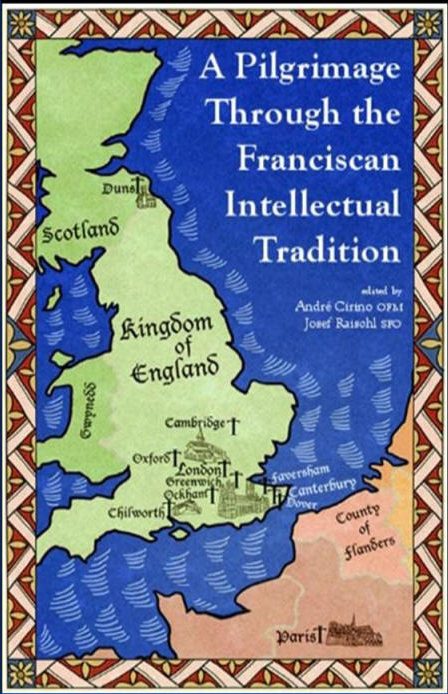
The Franciscan Intellectual Tradition arose in the ferment of ideas of the 13th and 14th centuries. Questions of what makes an individual, what system of government is best for society, how should the economy be managed, what is the role of experiment in science, property rights and the rights of the individual in society – in short many of the questions that trouble our modern world – were debated with insight, integrity and passion in the context of a theology that was both profoundly orthodox and radical. The Franciscan Intellectual Tradition is not a monolith with a single answer to any problem, but a tradition of enquiry and openness rooted in the insights of the Poor Man of Assisi and his followers in Northern Europe. In the intellectual pilgrimage of this book we find a variety of approaches engendered by that spirit of enquiry and a tradition with the diversity and strength to continue to enlighten our pilgrimage through life today. 

Philippe Yates, JCD, MA

Details see Tau-Publishing

published in 2015

During Advent, our sisters were re-acquainted with St. Bonventure’s Five Feasts of the Child Jesus. The following weekend, fifty-one people, religious and laity, read, reflected on and prayed the Five Feasts. It gives me great satisfaction to know that more than one hundred people have become familiar with this document on spiritual motherhood, which, when embraced, changes the manner in which a person, who contemplates the Incarnate Word, will celebrate the feasts of Annunciation, Nativity, Holy Name of Jesus, Epiphany, and Presentation. Sr. Marion Kikukawa OSF Our Poor Clare monastery was in a process with a facilitator who suggested that we name the significant events of the past year. Close to the top of the list was last December’s retreat on the Five Feasts. Since then, when other communities asked me to do something for a day of recollection or a directed retreat, I used the Five Feasts and it always has appeal. I thought that when one has the inspiration to do something with a work such as the Five Feasts and then creates a way of presenting it which involves a lot of labor and also the joy of sharing, it is good to know about the fruit it produces. Sr. Elizabeth Enoch OSC

See Tau-Publishing

published in 1995

In the first section—Early Eremitical Elements and Movements Preceding and Contemporaneous with the First Franciscans—we attempt to give the reader a survey of early eremiticism in order to better appreciate and understand Francis and Clare in their thrust for solitude. Having discovered a very rich tradition, we decided to include this material as historical background. We begin with some biblical notions put forth by Martino Conti, OFM, scripture scholar and professor at the Antonianum in Rome. Then a few brief bridge notions about the postbiblical eremitical development are presented by the Austrian Johannes Fleischacker; Benedikt Mertens, OFM, from Mannheim, Germany, expands into the 11th century; Cinzio Violante builds on this foundation and brings the reader into the 12th century as well. Because the Franciscan Movement has had a feminine component since its inception with the Lady Clare as well as lay people in the Order of Penitents (Secular Franciscans) joining Francis, we thought it would be appropriate to include research on the feminine hermit tradition. We conclude this section with a pair of articles by women on female hermits. Edith Pasztor, a colleague of Raoul Manselli, writes of the ideals of female eremitism in Europe from 1200 to 1500 while Giovanna Casagrande focuses on some forms of female solitary life in central Italy. The Eremitical Experience of Francis and the First Franciscans Our interest in Franciscan eremitism was deepened while we heard Lazaro Iriarte, OFM Cap., speak on the subject at the Capuchin Franciscan Institute in Rome. It was there he made the startling statement that Francis had founded no hermitages but had rather sought out solitary places for prayer. It was later Franciscan generations which called Francis’s places of prayer “hermitages.” Focusing on Francis’s desire for solitude, we take a look at the eremitical experience of Francis and the first Franciscans. Benedikt Mertens, OFM, provides a glimpse into “Solitude In Francis’s Life.” Then Martino Conti, OFM, takes a look at Francis’ primitive solitude experience and apostolic choice. With clarity, Conti notes the balance Francis sought between the active and contemplative stances. Marcella Gatti, through her historical profile of the Carceri, gives a descriptive background of one of the places where Francis sought not so much to establish a hermitage as to find solitude among hermits. Finally, Mertens offers a concluding summary to this section.

Review by Bill Short OFM